
Seed-Strapping: The Founder's Playbook for Scaling Without Surrendering Control
Learn how seed strapping can fuel your startup's growth. Discover practical strategies and insights to navigate this crucial funding stage. Read more!


Why most scaling advice is wrong, and what actually works in today's retail landscape
You've built something. Your retail business is humming along, customers are buying, and you're making money. Now comes the question that keeps every entrepreneur awake at 3 AM: "How do I scale this thing without breaking it?"
Most businesses die during scaling, not during startup. It's like trying to perform heart surgery while running a marathon. The very act of growth can kill what made you successful in the first place.
However, retail is undergoing its most dramatic transformation since the advent of the shopping mall. The old rules don't just need updating; they need to be thrown out entirely. This isn't your grandfather's retail game anymore.
The retail landscape today resembles a post-apocalyptic battlefield. Traditional retailers are closing stores faster than you can say "Amazon Prime," while nimble direct-to-consumer brands are popping up like mushrooms after rain. Some of the best-performing real estate assets are retail plazas. The key is to find a way to elevate the experience through experiential retail. Chaos is your opportunity.
| Traditional Retail Thinking | New Retail Reality | Your Action |
|---|---|---|
| "Build it and they will come" | Customers have infinite options | Become irresistibly remarkable |
| "Location, location, location" | Experience, experience, experience | Become irresistibly remarkable |
| "Compete on price" | Compete on value and meaning | Build emotional connections |
Think of today's retail environment like dating in the digital age. You're no longer competing with the person across the street – you're competing with everyone on the planet. Your customers can swipe left on your business faster than you can say "customer acquisition cost."
Your customers now expect:
Fostering customer engagement is crucial for exceeding expectations and cultivating lasting relationships.
The brutal truth? Meeting expectations gets you nowhere. Exceeding them is your only path to survival.
Most business plans are fiction disguised as financial projections. Instead of writing a novel about your future, you need to build what I call your "North Star Strategy" – a simple, obsessive focus on the one thing that makes you different.
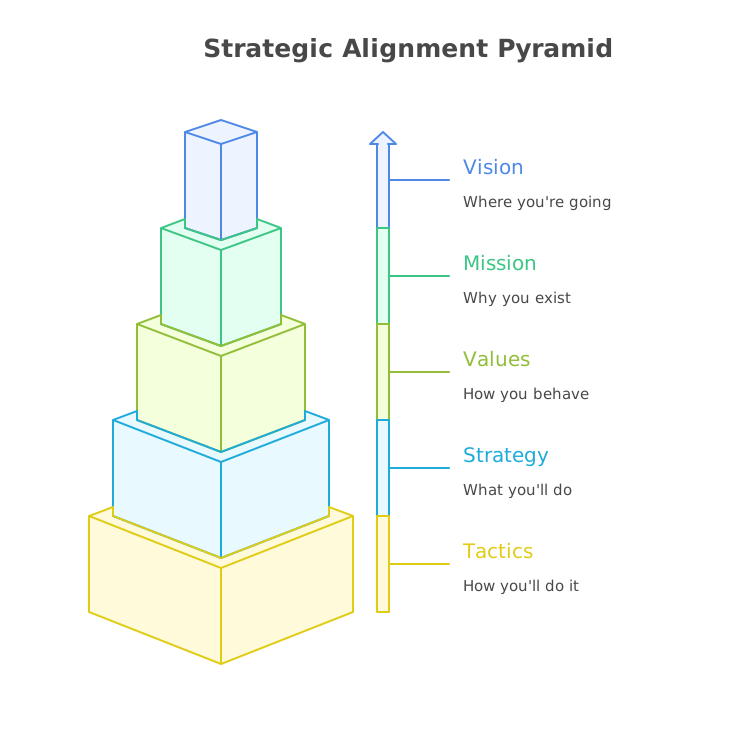
Vision (Where you're going)
↓
Mission (Why you exist)
↓
Values (How you behave)
↓
Strategy (What you'll do)
↓
Tactics (How you'll do it)
Aligning your strategy with your operational capacity ensures you can execute growth initiatives without overextending your resources.
The 80/20 Rule of Retail Strategy:
Instead of planning for success, plan for failure. Ask yourself:
Successful financial planning for growth necessitates the use of tools to consider multiple scenarios and develop contingency plans, thereby ensuring resilience in the face of uncertainty. Maintaining financial stability is crucial for weathering setbacks and supporting long-term growth and scaling efforts.
This isn’t pessimism – it’s preparation. The Navy SEALs don’t plan for perfect weather; they plan for the storm.
Here's what every business school gets wrong about funding: The best time to raise money is when you don't need it. When you're desperate for cash, you smell like desperation, and investors can smell that from three time zones away. Desperation conveys risk and drives valuations down.
| Pillar | Traditional Approach | Contrarian Approach |
|---|---|---|
| Cash Flow | Manage it | Obsess over it |
| Unit Economics | Know your numbers | Know your customer's lifetime journey |
| Funding | Raise when you need it | Raise when you're killing it |
| Profit | Eventually | From day one (even if small) |
Growth isn’t free. Every dollar of revenue increase typically requires:
The Growth Paradox: The faster you grow, the more likely you are to lose what made you successful in the first place.
Forget venture capital for a moment. Consider these options:
Operational excellence isn’t about speed. It’s about intentionality. Doing the right things, not just doing things faster. Building a scalable infrastructure means having reliable technology and airtight processes in place to support growth without compromising quality.
| Level | Focus | Characteristics | Next Step |
|---|---|---|---|
| Survival | Keep the lights on | Chaos, firefighting | Systematize |
| Systematic | Predictable results | SOPs, automation, KPIs | Optimize |
| Strategic | Moat-building | Ops as differentiator | Innovate |
Not everything should be automated. Use this framework:
Automating routine tasks such as invoicing and reporting allows staff to focus on higher-value, strategic activities.
Inventory is like cholesterol for your business – a little is necessary, but too much will kill you. The average retailer has 30-40% of its capital tied up in inventory. That’s not working capital; that’s sleeping capital.
Inventory Velocity = Cost of Goods Sold (COGS) ÷ Average Inventory Value
Effective inventory management, including tracking stock levels and optimizing supply chains, is critical for reducing costs and meeting customer demand.
If your inventory turns over less than 6 times per year, you’re not running a retail business – you’re running a very expensive storage facility.
We've moved from a service economy to an experience economy. Your customers aren't just buying products; they're buying feelings, status, and stories they can share on social media.
Emotional Layer (How customers feel)
↓
Functional Layer (What customers get)
↓
Technical Layer (How it works)
Most retailers optimize the bottom layer. Winners optimize the top layer.
Every customer interaction has three types of moments:
| Moment Type | Definition | Retail Example | Impact on Loyalty |
|---|---|---|---|
| Moments of Truth | First impressions | Walking into your store | High |
| Moments of Pain | Friction points | Checkout process | Very High |
| Moments of Magic | Unexpected delight | Surprise upgrade | Extremely High |
The 3-Second Rule: You have three seconds to make a first impression, three minutes to create engagement, and three hours to generate a memorable experience.
Create experiences that are:
Most loyalty programs are participation trophies for showing up. They reward the behavior you want (repeat purchases) but don't create the emotion you need (genuine loyalty).
Real loyalty isn't transactional – it's emotional.
Nurturing your existing customer base through personalized engagement and loyalty programs is essential for creating brand advocates.
Most businesses focus on moving prospects to customers. Winners focus on moving customers to advocates.
Advocates (Will defend your brand)
↑
Loyalists (Choose you repeatedly)
↑
Satisfied (Happy but not committed)
↑
Customers (One-time buyers)
↑
Prospects (Aware but haven't bought)
Nurturing your existing customer base through personalized engagement and loyalty programs is essential for creating brand advocates.
Most businesses focus on moving prospects to customers. Winners focus on moving customers to advocates.
| Customer Type | Acquisition Cost | Retention Cost | Lifetime Value | ROI |
|---|---|---|---|---|
| New Customer | $50 | N/A | $200 | 4x |
| Repeat Customer | $0 | $10 | $500 | 50x |
| Advocate | $0 | $5 | $1,000+ | 200x+ |
While attracting more customers is a common goal for many businesses, focusing on retention and maximizing value from existing customers can often yield higher returns.
The Uncomfortable Truth: A 5% increase in customer retention can increase profits by 25-95%. Yet most retailers spend 7x more on acquisition than retention.
Create relationships that get stronger under stress:
Traditional marketing is dead, and social media killed it. In a world where the average person sees 5,000+ marketing messages per day, being louder isn't the answer – being different is. Metrics like customer feedback can provide insights for refining branding and marketing strategies, helping businesses stand out in a crowded marketplace.
| Old Marketing | New Marketing | Why It Matters |
|---|---|---|
| Interrupt and pitch | Add value first | Attention is earned, not bought |
| Mass market | Micro-communities | Relevance beats reach |
| Brand voice | Brand personality | People buy from people |
| Campaign thinking | Always-on relationship | Consistency compounds |
The line between content and commerce is disappearing. Your marketing isn't separate from your product – it IS your product experience.
The Content Hierarchy:
The magic ratio? 80% value-add content, 20% promotional. Most retailers have this backwards.
Influencer marketing isn't about finding people with millions of followers – it's about finding people with the right followers. A micro-influencer with 10,000 engaged followers in your niche beats a celebrity with 1 million disengaged followers every time.
The Authenticity Algorithm:
Influence = Reach × Relevance × Trust × Engagement
Every growing business faces this choice: scale fast and risk losing your soul, or grow deliberately and risk being overtaken by competitors. The answer isn't choosing one – it's transcending the dilemma.
| Growth Type | Characteristics | Risk Level | Sustainability |
|---|---|---|---|
| Exponential | VC-funded, winner-take-all | Extremely High | Low |
| Linear | Steady, predictable | Medium | Medium |
| Exponential | Organic, customer-funded | Low | High |
The Compound Growth Secret: Small, consistent improvements compound into massive advantages over time. A 1% daily improvement compounds to 37x better in a year.
Before expanding, ask:
Sometimes the best growth strategy is saying no to growth opportunities. Warren Buffett's success comes not from the deals he made, but from the deals he didn't make.
Expansion Filters:
The future of retail isn't online OR offline – it's online AND offline, seamlessly integrated. Your physical locations aren't just sales channels; they're brand experiences, fulfillment centers, and customer touchpoints.
| Store Type | Primary Function | Size | Investment Level |
|---|---|---|---|
| Flagship | Brand experience | Large | High |
| Neighborhood | Convenience + community | Medium | Medium |
| Pop-up | Testing + buzz | Small | Low |
| Dark store | Fulfillment only | Warehouse | Medium |
Third-party marketplaces aren’t just sales channels – they’re customer acquisition platforms. Adopting a marketplace model allows retailers to connect with new customers and scale their business through established online platforms. Use them to find customers, then bring them into your ecosystem.
The Marketplace Graduation Path:
Sustainable growth involves adapting strategies based on market research and customer feedback, ensuring that each stage of the graduation path aligns with evolving market needs.
se data to make location decisions:
Your inventory strategy reveals your business model. Fast fashion turns inventory quickly with lower margins. Luxury brands tend to grow slowly, but with higher margins. There's no right answer – only the right answer for your strategy.
Your inventory strategy reveals your business model. Fast fashion turns inventory quickly with lower margins. Luxury brands tend to grow slowly, but with higher margins. There's no right answer – only the right answer for your strategy.
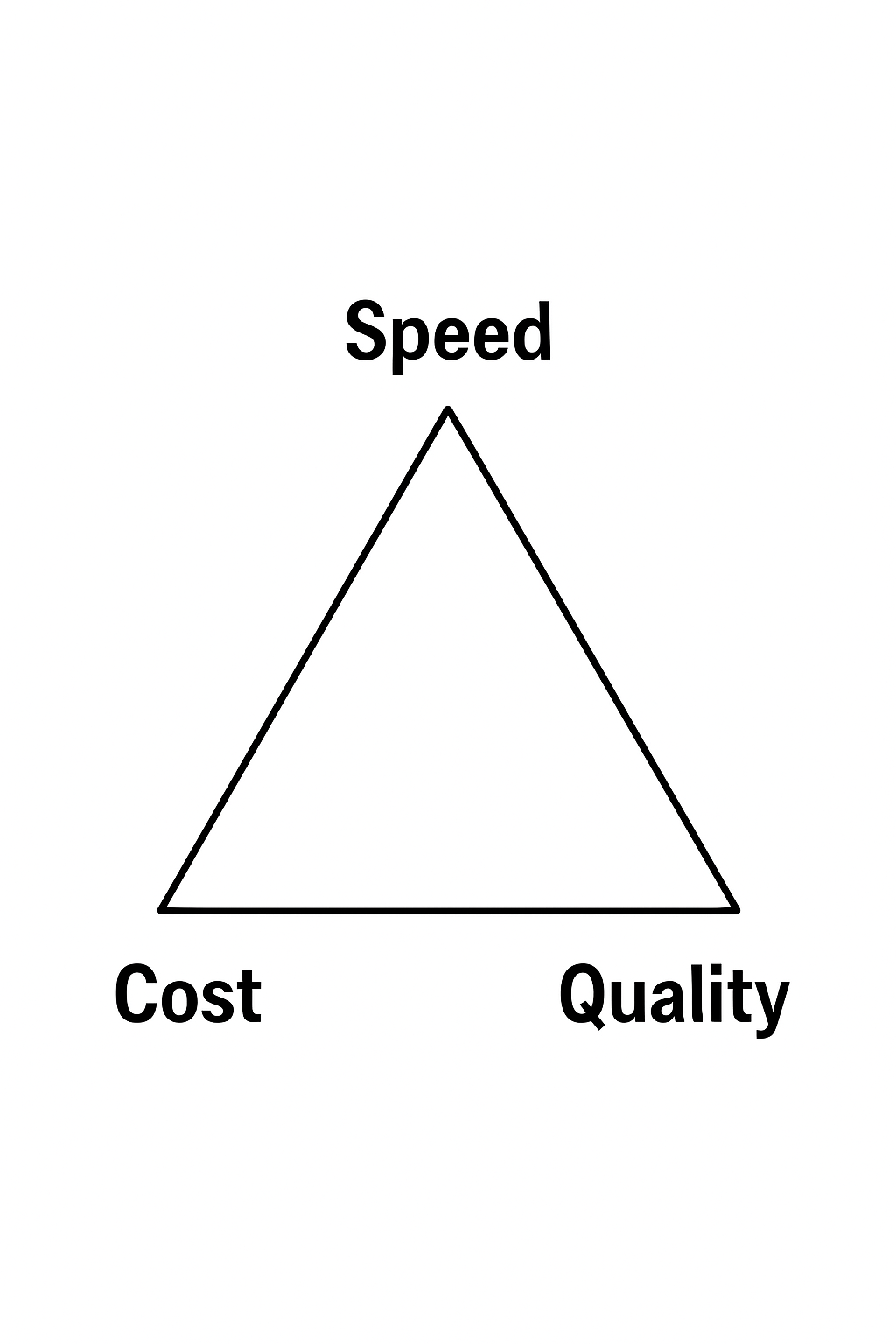
You can optimize for two, but not all three. Choose wisely based on your customer expectations and competitive positioning.
| Leverage Point | Traditional Approach | Innovative Approach | Impact |
|---|---|---|---|
| Forecasting | Historical data | AI + real-time signals | High |
| Sourcing | Lowest cost | Best total value | Medium |
| Warehousing | Own everything | Hybrid model | High |
| Fulfillment | Standard shipping | Multiple options | Very High |
Your supply chain isn't just a cost center – it's a competitive weapon. Amazon didn't win on product; they won on logistics. Zara didn't win on design; they won on speed to market.
Supply Chain Innovation Areas:
In the world of retail business, what you measure is what you move. Yet, most retail businesses obsess over the wrong numbers—chasing likes, followers, and foot traffic, while ignoring the metrics that actually drive business growth and customer satisfaction. If you want to scale your business successfully, you need to measure what matters, not just what’s easy to count.
A successful retail business doesn’t just track numbers for the sake of it. It uses data to make informed decisions, support growth, and build a business model that stands the test of time. The right metrics are your compass in the chaos of industry trends, shifting customer expectations, and the relentless pursuit of retail success.
Forget the standard-issue dashboard. The contrarian KPI playbook is about tracking the metrics that most retail businesses overlook—metrics that reveal the true health of your business and the strength of your customer relationships.
By focusing on these metrics, your retail business can spot weaknesses in loyalty programs, identify opportunities for profitable growth, and make data-driven decisions that support long-term success. For example, if your customer retention rate is slipping, it’s a sign to revisit your customer experience and loyalty initiatives before pouring more money into acquiring new customers.
Vanity metrics are the empty calories of the retail world. It's certainly satisfying to see your social media followers or website traffic increase, but these numbers often fail to translate into tangible business growth or customer satisfaction.
The most successful retail businesses don’t just measure once and move on—they build a culture of continuous evaluation. This means regularly conducting market research, gathering customer feedback, and analyzing market trends to stay ahead of consumer demands and industry shifts.
By embedding continuous evaluation into your business model, you’ll stay agile, adapt to changing customer expectations, and drive retail success—even as the market evolves. For example, if customer feedback reveals frustration with your online store’s checkout process, upgrading technology or automating processes can boost customer satisfaction and retention.
Ultimately, measuring what matters is the key to distinguishing between a retail business that merely survives and one that thrives. Focus on the metrics that drive customer loyalty, repeat purchases, and sustainable expansion. Build a culture that values data-driven, informed decisions. That’s how you scale your business—not by chasing every trend, but by mastering the fundamentals that fuel long term success.
The retail apocalypse is over. The retail renaissance has begun.
The winners won't be the biggest or the oldest – they'll be the most adaptive, the most customer-obsessed, and the most willing to challenge conventional wisdom.
Scaling a retail business in today's environment isn't about following a playbook – it's about writing your own. The strategies that got you here won't get you there. The comfort zone is the danger zone. And the only way to predict the future is to create it.
Your scaling journey starts with a simple question: What if everything you know about retail is wrong?
The answer to that question is your competitive advantage.
The choice is yours: Follow the crowd toward mediocrity, or lead the rebellion toward remarkable.
What will you choose?
"In retail, as in life, the biggest risk is not taking any risk at all. The companies that will thrive are those that are willing to cannibalize their own business model before someone else does it for them."
These action steps are particularly valuable for small business owners seeking sustainable growth, as they help ensure that scaling efforts are both cost-effective and manageable.
Remember: Perfect planning prevents progress. Start before you’re ready, adjust as you go, and never stop learning.
The retail renaissance is here. Will you lead it or watch it pass you by?
Learn how seed strapping can fuel your startup's growth. Discover practical strategies and insights to navigate this crucial funding stage. Read more!
Learn how the Lehman scale sets M&A and capital-raising success fees: the Lehman formula, Double Lehman, modern variations and what founders should negotiate.
Explore the J Curve's implications for investors and strategists, balancing risks and rewards. Gain insights to enhance your decision-making—read more now!
Learn practical strategies to overcome common challenges as a first-time fund manager. Dive into our guide for essential tips and insights. Read more!
MIT found 95% of AI pilots fail. See how companies use AI to improve client workflows — and why integration decides the winners.
Discover how the CEO of the future is transforming business leadership and driving change. Read the article to learn more about this emerging role.
Quality of Earnings (QoE): understand what buyers and investors look for, uncover red flags, and boost valuation before your exit.
Maximize your productivity with our CEO time management template. Learn strategies to structure your day effectively. Read more for practical insights!
How founders use a 90-day execution sprint to turn strategy into results: set quarterly priorities, align the team and keep everyone accountable for progress.
Discover key insights on investor perceptions when founders become defensive. Learn tips to navigate tough conversations effectively. Read the article now!