
Seed-Strapping: The Founder's Playbook for Scaling Without Surrendering Control
Learn how seed strapping can fuel your startup's growth. Discover practical strategies and insights to navigate this crucial funding stage. Read more!



The startup funding landscape has evolved dramatically, creating more defined stages with clearer expectations at each level. For founders navigating this terrain, understanding the critical distinctions between pre-seed and seed funding isn't just academic—it's existential. The difference between these two early funding rounds can mean the difference between launching effectively and wandering in the wilderness of undercapitalization.
Pre-seed is about validating your concept and building your MVP, while seed funding propels you toward market validation and scaling. This guide breaks down these crucial first funding stages with precision and clarity, providing founders with actionable insights to secure the right funding at the right time.
| Criteria | Pre-Seed | Seed |
|---|---|---|
| Stage Definition | Idea/MVP Development | Market Validation & Scaling |
| Typical Funding | 50K - 250K | 500K - 2M+ |
| Product Maturity | Prototype / MVP | Live Product with Traction |
| Investor Type | Friends, Family, Angels | Angel & VC |
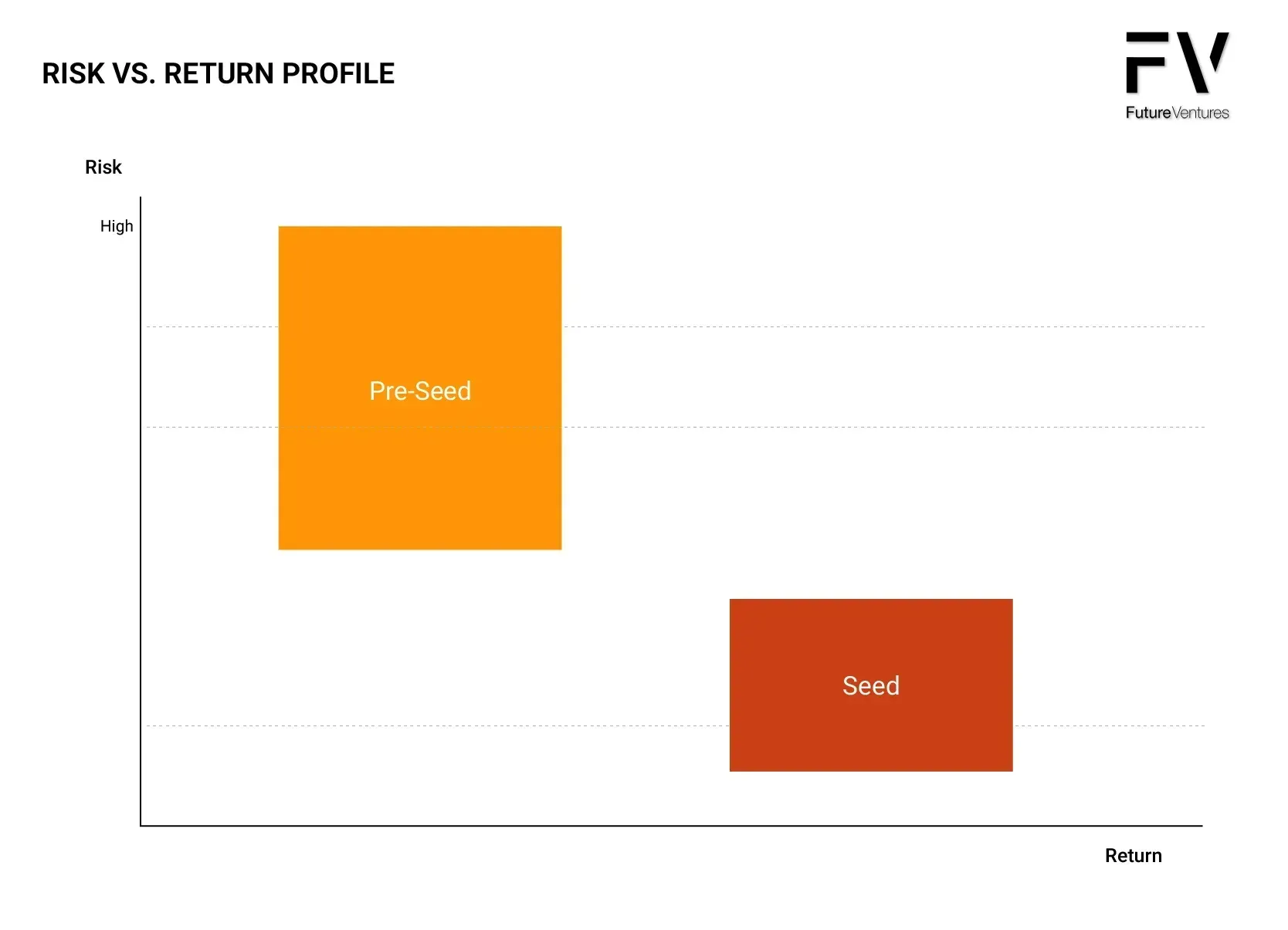
| Risk Level | Very High | High |
| Valuation | 1M - 3M | 5M - 15M |
| Use of Funds | Concept Validation, MVP, Team | Scaling, Product Refinement |
The startup funding landscape has become increasingly stratified, with pre-seed emerging as a distinct phase from what was traditionally lumped into "seed" funding. In some cases, the 3F (Friends, Family and Fools) has emerged as a distinct phase preceding the pre-seed round. This evolution reflects the growing sophistication of early-stage investment and higher expectations at each funding milestone.
Many pre-seed investors look for signs of bootstrap traction, which isn't limited to revenue; it can also manifest as a minimum viable product (MVP). This statement captures the essential shift: investors now have specific expectations even at the earliest funding stages.
Understanding the different funding stages is crucial for startup founders to navigate the fundraising process. Each stage of funding serves a specific purpose and is designed to help startups progress to the next level of growth. As startups evolve, they require different amounts of capital and resources, making it important for founders to be well-versed in the nuances of each funding stage.
Pre-seed and seed funding are two of the earliest stages of funding, and it’s essential to know the key differences between them.
Each funding stage has its unique characteristics, and founders should be aware of these differences to make informed decisions. For example, pre-seed funding might focus more on validating a business idea and developing an initial product, while seed funding could be aimed at scaling operations and increasing market traction. By understanding these distinctions, founders can better align their strategies with investor expectations, increasing the likelihood of securing the necessary capital for their startup's success. The key difference between pre-seed and seed funding is market traction; pre-seed companies are typically unproven.
Pre-seed funding is one of the earliest stages of funding, often following the "friends and family" or also known as the 3F or Three F round, standing for Friends, Family and Fools. The 3F relies heavily on those closest to the founder who believe in the vision before tangible results exist. While the friends and family round is typically the very first source of external capital for a startup, pre-seed funding serves as a more structured financial boost to help transition from a mere idea to a tangible product or service. Pre-seed funding represents the earliest, external to 3F, capital infusion for startups, typically occurring during ideation and initial development phases.
The primary goal of pre-seed funding is to transform ideas into tangible prototypes. This funding stage is focused on ensuring the solution addresses a real market need. Pre-seed funding is primarily focused on early product development and proving a need in a niche market. Entrepreneurs use pre-seed funding to create a minimum viable product (MVP) and test the market.
This stage is crucial for early product development, market research, and demonstrating a market need. Pre-seed funding often involves a mix of angel investors and early-stage venture capitalists who are willing to take a risk on unproven concepts with high potential.
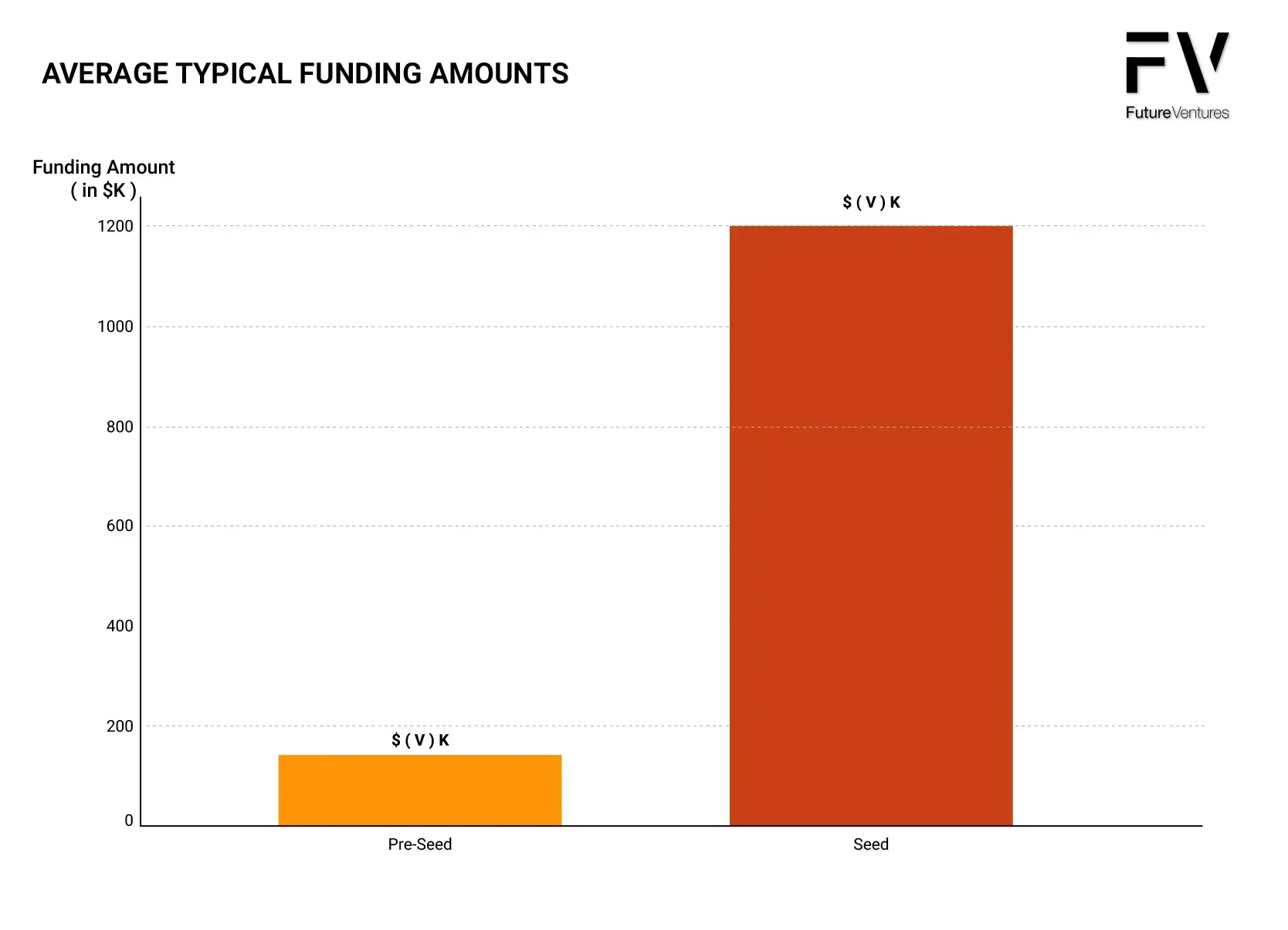
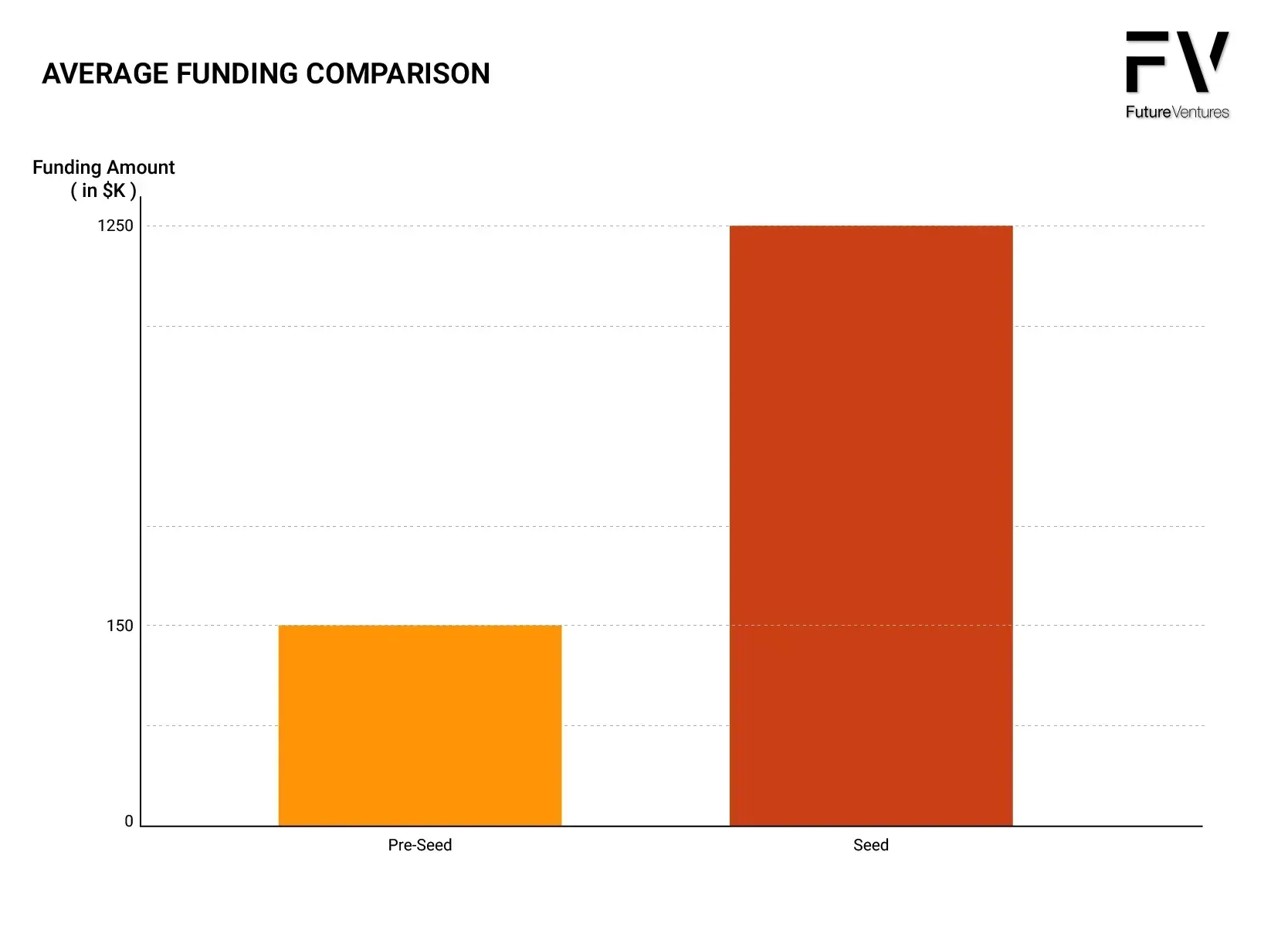
At the pre-seed stage, startups typically lack revenue and sometimes even a functioning product. What they do have is potential—a compelling vision backed by initial research and perhaps a rudimentary prototype. The funding amounts are relatively modest, ranging from $50,000 to $250,000, reflecting the early, high-risk nature of the investment. Companies typically raise between $50K to $250K during pre-seed funding.
Pre-seed investors primarily evaluate three factors:
Most pre-seed founders shouldn't rely on money to start their business; rather, they should use it to enable growth. This captures the core expectation: pre-seed funding shouldn't be about conception but about the acceleration of an already-initiated vision.
No, pre-seed and angel investment are not the same, though they often overlap:
Key distinctions:
Seed funding represents the first significant institutional investment round, occurring when a startup has demonstrated initial traction with its product or service. If pre-seed funding is about legitimizing an idea, seed funding is about legitimizing a business.
Seed funding shifts its primary focus from validating a business idea to scaling and expanding into new markets. It provides startups with the necessary resources to refine their products, grow their user base, and lay the groundwork for rapid growth. This stage of funding is crucial for refining the business model, expanding the team, and gaining market traction. Founders utilize seed funding to solidify their business ideas and prepare for future funding rounds. Seed funding focuses on scaling operations and covering operational expenses. Additionally, it is often used for product production, market research, and hiring key team members.
By the seed stage, investors seek clear advancements—beyond mere hopeful concepts. Expectations escalate significantly. Investors expect the company to have a market-ready product that consumers are eager to buy. The funding amounts increase accordingly, typically ranging from $200,000 to $2 million or more.
Seed investors focus on:
This stage represents the transition from an experimental venture to a growth-oriented business. The expectation isn't perfection but rather a validation that the business concept works and can scale with additional resources.
| Criteria | Pre-Seed | Seed |
|---|---|---|
| Stage Definition | Idea, MVP Development and Market Research | Market Validation & Scaling |
| Business Phase | Concept validation | Growth acceleration |
| Typical Funding* (ranges vary based on market and industry) | $50K - $250K | $200K - $2M+ |
| Product Maturity | Prototype / MVP | Live Product with Tractio |
| Investor Type | Friends, Family, Angels | Angel & VC |
| Risk Level | Very High | High |
| Valuation | $1M - $3M | $5M - $15M |
| Use of Funds | Concept Validation, MVP, Team | Scaling, Product Refinement |
| Revenue Expectations | Pre-revenue to minimal | Early recurring revenue |
| Team Size | Founders + core members | Growing team with specialists |
| Market Validation | Hypothesis and initial feedback | Demonstrated customer adoption |
| Runway Created | 12-18 months | 18-24 months |
The fundamental distinction between pre-seed and seed funding is the shift from potential to proof.
The maturity expectations also differ dramatically. For pre-seed, a thoughtful concept with initial validation may suffice. For seed, investors expect "a live product in a market that people are willing to pay for"—a much higher bar requiring significant progress between funding stages.
You're likely ready for pre-seed funding when:
As one expert explains: "The right time to raise pre-seed funding is a confluence of market readiness, idea maturity, personal preparedness, and financial necessity". This timing requires honest self-assessment of your startup's development stage.
You're positioned for seed funding when:
A critical mistake many founders make is pursuing seed funding prematurely. As one venture firm notes, "Pursuing a seed round when you are actually pre-seed can waste six months of your life and create unnecessary anguish."
At the pre-seed stage, focus on:
For seed funding success
A pitch deck and business plan are essential tools for securing funding. Founders should create a clear and concise pitch deck that showcases their business idea and market fit. A business plan should outline the company’s goals, milestones, and financial projections. Founders should be prepared to present their pitch deck and business plan to potential investors. As many investors often say, "Always be raising!"
Funding Progression Roadmap
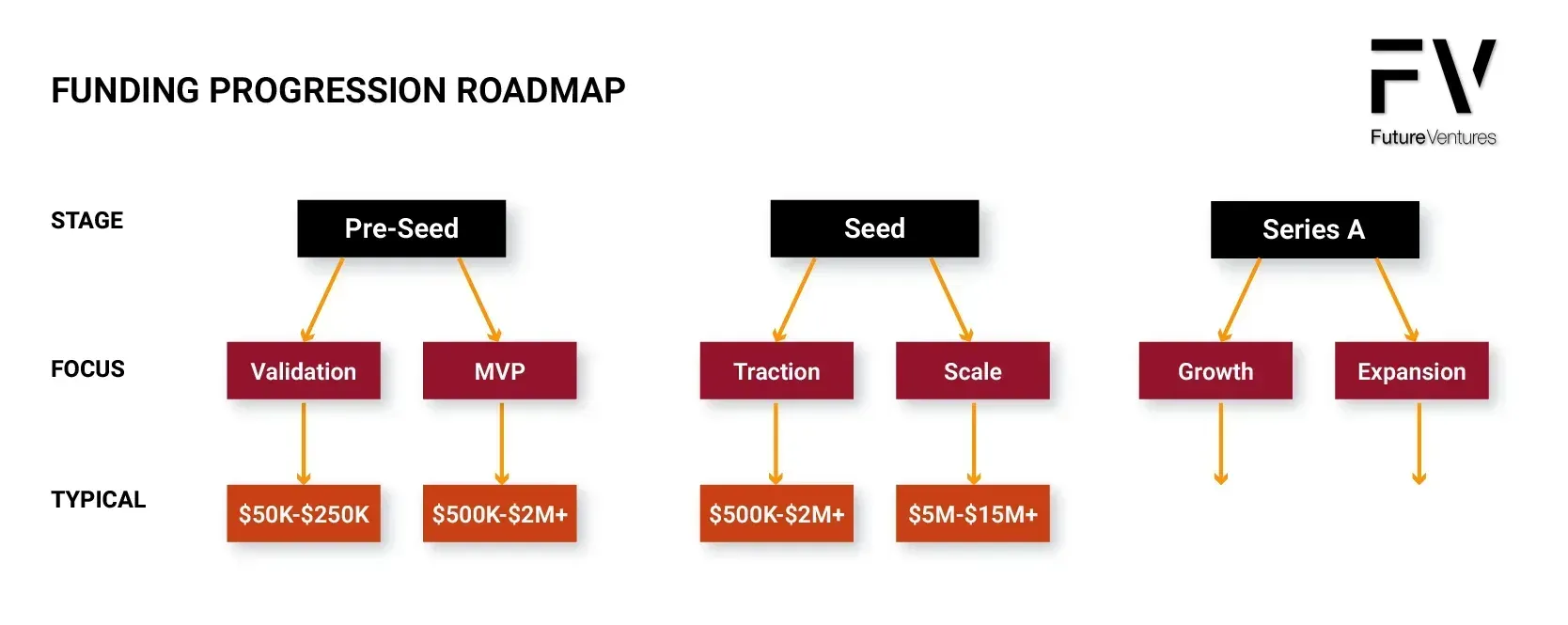
The timeline from pre-seed to seed funding typically spans 6 to 18 months, depending on the startup's progress, industry, and ability to hit key milestones. Pre-seed funding generally provides a runway of 6–18 months, during which startups focus on developing their MVP and validating their concept. Founders are advised to start preparing for seed funding at least 6 months before their pre-seed runway ends to ensure a smooth transition without financial gaps.
Pre-seed funding comes with several potential drawbacks:
Startups seeking pre-seed or seed funding have a variety of choices, including incubators, accelerators, angel investors, family offices, venture capital firms, and crowdfunding platforms.
Founders should research and network with potential investors to find the right fit for their company. Building relationships with investors is crucial for securing funding and getting valuable feedback.
In the pre-seed stage, founders can most effectively raise capital or expand their businesses by engaging with incubators, utilizing crowdfunding, or presenting their ideas to angel investors. Below are some of the top programs and platforms available for pre-seed startups:
During the seed stage, startups have opportunities to seek support from crowdfunding, angel investors, and family offices and can begin pitching to venture capitalists (VCs) while applying for accelerator programs. It's important to note that some of the programs and investors mentioned offer options at the pre-seed stage, too, although their main focus is on seed-stage startups.
The distinction between pre-seed and seed funding isn't semantic—it's strategic. Jumping prematurely to seed funding without proper pre-seed development can doom otherwise promising ventures. As one venture capital firm starkly warns, "Only about 10% of the companies we work with have successfully raised a seed round without both an MVP and some demonstrated level of market traction".
The savvy founder understands that each funding stage serves a distinct purpose in the startup's evolution. Pre-seed funding transforms ideas into viable products, while seed funding converts viable products into growing businesses. Matching your funding approach to your actual stage of development isn't just good practice—it's essential for survival.
In the words of Scott Galloway, "Money is a commodity, but the timing and strategy behind it are not". For founders navigating the complex startup ecosystem, this insight might be the difference between building the next unicorn and joining the 90% of startups that fail.
Choose your funding stage wisely, align your expectations with reality, and remember: the goal isn't just to raise money—it's to build a sustainable, growth-oriented business that delivers value to customers and returns to investors.
Maxim Atanassov is a strategic advisor, transformation leader, and investor with over 20 years of experience scaling businesses across sectors. Based in Calgary, Maxim blends deep financial insight with emerging technologies to unlock growth, manage risk, and build future-ready organizations.
As a serial entrepreneur and tech founder, Maxim has led complex transformations that turn vision into execution—helping companies modernize operations, architect new capabilities, and outperform their industries. His approach fuses AI integration with strategic governance, enabling clients to capitalize on disruption and scale with confidence.
At Future Ventures, Maxim partners with founders, executives, and investors to drive bold change—offering hands-on guidance from idea to impact. Known for his clarity in strategy design and ability to operationalize innovation, he plays a pivotal role in shaping the ventures and ventures-to-be that define tomorrow.
Learn how seed strapping can fuel your startup's growth. Discover practical strategies and insights to navigate this crucial funding stage. Read more!
Learn how the Lehman scale sets M&A and capital-raising success fees: the Lehman formula, Double Lehman, modern variations and what founders should negotiate.
Explore the J Curve's implications for investors and strategists, balancing risks and rewards. Gain insights to enhance your decision-making—read more now!
Learn practical strategies to overcome common challenges as a first-time fund manager. Dive into our guide for essential tips and insights. Read more!
MIT found 95% of AI pilots fail. See how companies use AI to improve client workflows — and why integration decides the winners.
Discover how the CEO of the future is transforming business leadership and driving change. Read the article to learn more about this emerging role.
Quality of Earnings (QoE): understand what buyers and investors look for, uncover red flags, and boost valuation before your exit.
Maximize your productivity with our CEO time management template. Learn strategies to structure your day effectively. Read more for practical insights!
How founders use a 90-day execution sprint to turn strategy into results: set quarterly priorities, align the team and keep everyone accountable for progress.
Discover key insights on investor perceptions when founders become defensive. Learn tips to navigate tough conversations effectively. Read the article now!








