

Seed-Strapping: The Founder's Playbook for Scaling Without Surrendering Control
Learn how seed strapping can fuel your startup's growth. Discover practical strategies and insights to navigate this crucial funding stage. Read more!


What is a search fund? A Search Fund is an investment vehicle that enables entrepreneurs to acquire and operate a small to medium-sized business with support from external investors. Unlike traditional startups, where founders build a company from scratch, the search fund model raises capital specifically to purchase existing companies. The model appeals to recent MBA graduates and young professionals who want to become CEOs earlier in their careers. These entrepreneurs, called “searchers,” use the financial and advisory support of investors to identify, acquire, and scale a target business over several years, aiming to create value and achieve a profitable exit. Search funds give inexperienced entrepreneurs a quick path to managing a company with meaningful ownership.
The concept of search funds was pioneered in 1984 by H. Irving Grousbeck at Stanford University’s Graduate School of Business. Initially, search funds were a niche model predominantly in the United States. The emergence and growth of international search funds have been notable, with studies illustrating their rising number and global expansion. The performance and characteristics of international funds have been analyzed and tracked by academic institutions, highlighting their returns compared to North American funds. Over the decades, the model gained traction, particularly in North America, where search funds started as an alternative path to entrepreneurship. By the early 2000s, search funds began to expand globally, with increasing interest in Europe, Latin America, and, more recently, Asia. Today, search funds are recognized as a viable means for aspiring entrepreneurs to acquire and operate established businesses while providing investors with unique opportunities for potentially high returns. The International Search Fund Center established by IESE plays a crucial role in supporting international searchers and conducting in-depth analysis of search funds across different global regions.
Search funds occupy a unique position in the entrepreneurial landscape, bridging the gap between traditional startups and private equity. Unlike startups, which involve creating new products or services, search funds acquire existing businesses with proven market demand. This reduces some of the risks associated with startups. Search funds also offer a more accessible path for talented individuals to gain ownership and operational experience without needing substantial personal capital. For investors, most search funds provide access to the small and medium-sized enterprise market, which traditional private equity and venture capital firms often overlook.
The search fund model consists of several key components, each playing a vital role in the success of the overall process:
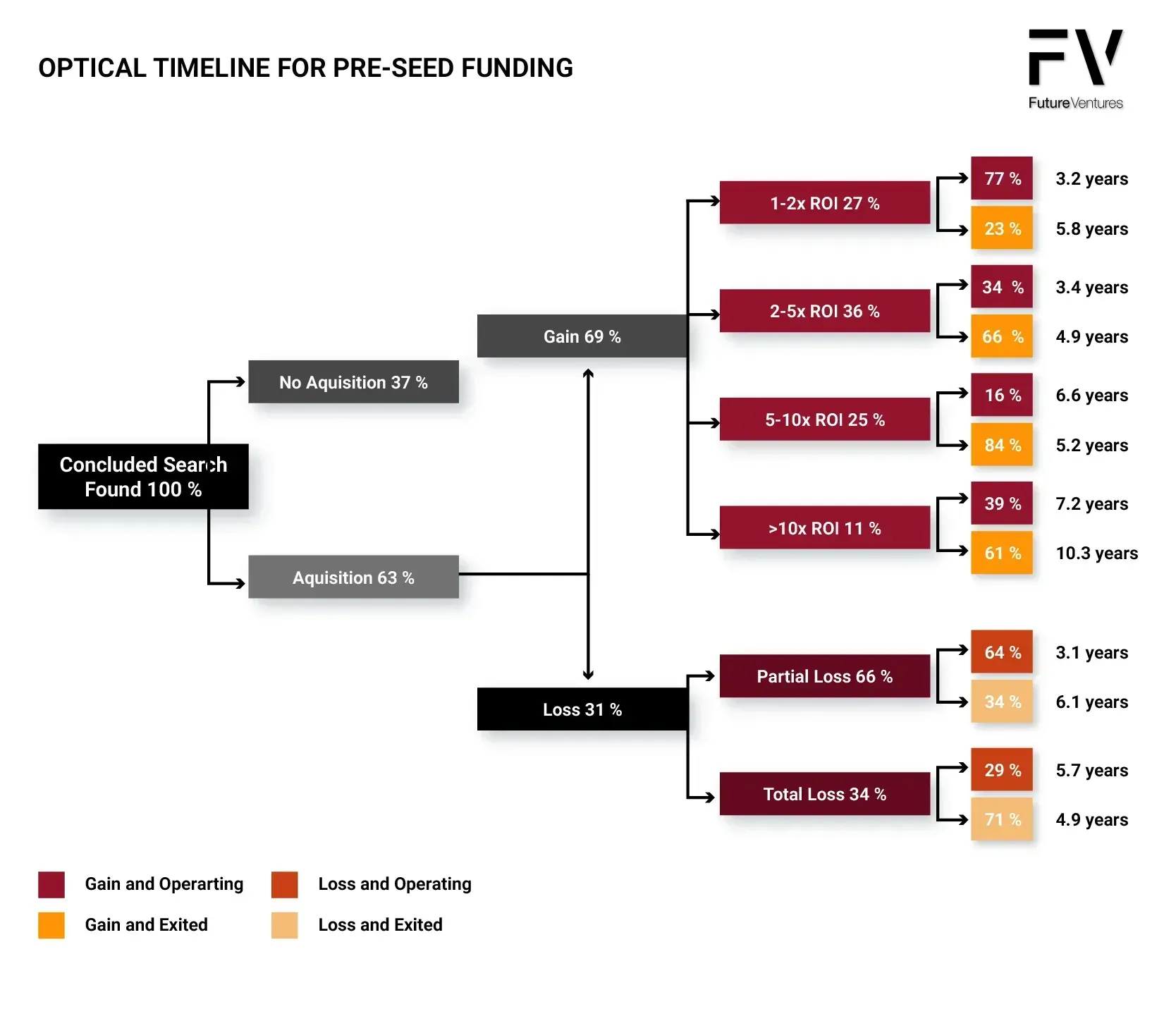
According to the 2024 Stanford Search Fund Study, 57% of searchers successfully acquired a company, indicating that while there is a reasonable chance of success, it is not guaranteed. These companies are often located in urban areas and employ strategic management approaches post-acquisition.
The search phase is the initial stage of the search fund process, during which the entrepreneur seeks a suitable business to acquire.
Once a suitable target is identified, the search fund enters the acquisition phase.
After acquiring the target company, the search fund enters the build phase, where the searcher focuses on growing and optimizing the business.
The search fund model continues to evolve with emerging trends and innovations, such as:
Search funds are gaining traction in regions outside the United States. The evolution and advantages of the search fund industry position it as a viable alternative to traditional startup pathways, offering the potential for wealth creation and lower risks through multiple acquisitions. Europe, Latin America, and Asia have seen a rise in search fund activity, driven by a growing number of entrepreneurial MBA graduates and a developing ecosystem of investors interested in the model.
Studies have shown that search funds in the United States and Canada have historically provided strong returns, contrasting with the performance metrics of international funds. According to the 2024 International Search Fund Study by IESE Business School, international search funds have delivered an overall ROI of 2.0x and an IRR of 18.1%, which are lower than the U.S. and Canada averages but still demonstrate positive returns.
Each region presents unique opportunities and challenges, such as differences in market size, regulatory environment, and cultural preferences. According to a 2016 IGF report, international search funds have different characteristics, favoring acquisitions in business services, IT, health care, and education.
Technology is transforming how searchers identify and evaluate potential acquisition targets. Tools like artificial intelligence, big data analytics, and advanced software platforms enable searchers to analyze market trends, assess competitive positioning, and streamline due diligence processes more efficiently. Additionally, technology plays a crucial role in optimizing operations and driving growth in acquired businesses.
As search funds become more prevalent, they may face increased regulatory scrutiny. Potential changes in legal frameworks governing these investments could impact how search funds are structured, financed, and operated. Searchers and investors need to stay informed about regulatory developments and adapt their strategies accordingly.
Successful search fund entrepreneurs typically possess a combination of skills and qualities that enable them to navigate the complexities of acquiring and managing a business:
The investment strategy of a search fund typically focuses on acquiring profitable, stable businesses with growth potential. Search fund investments offer exposure to a diverse set of opportunities with the potential for high returns and reduced risks.
To mitigate risks, search fund investors and searchers often employ several strategies:
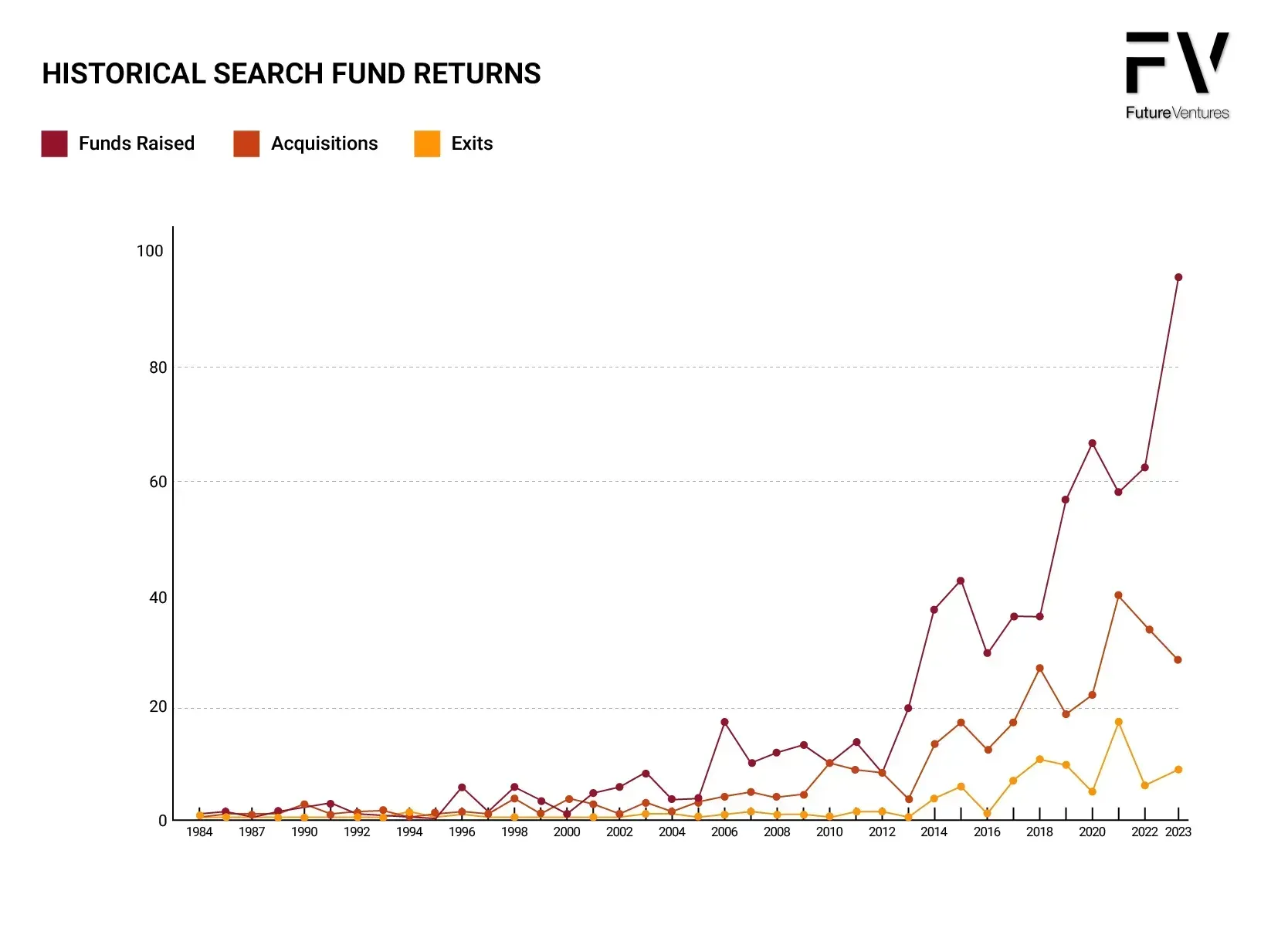
Historically, search funds have offered compelling returns to investors. Data indicates that the median return on invested capital for search funds is approximately 2.5-3x, with some top-performing search funds growing and achieving returns of 10x or more. These returns are often achieved over 5-7 years, making search funds a potentially attractive investment compared to traditional private equity. The aggregate pre-tax return on invested capital for search funds was 5.2x.
Value creation in search funds often involves a combination of operational improvements, strategic growth initiatives, and leveraging technology:
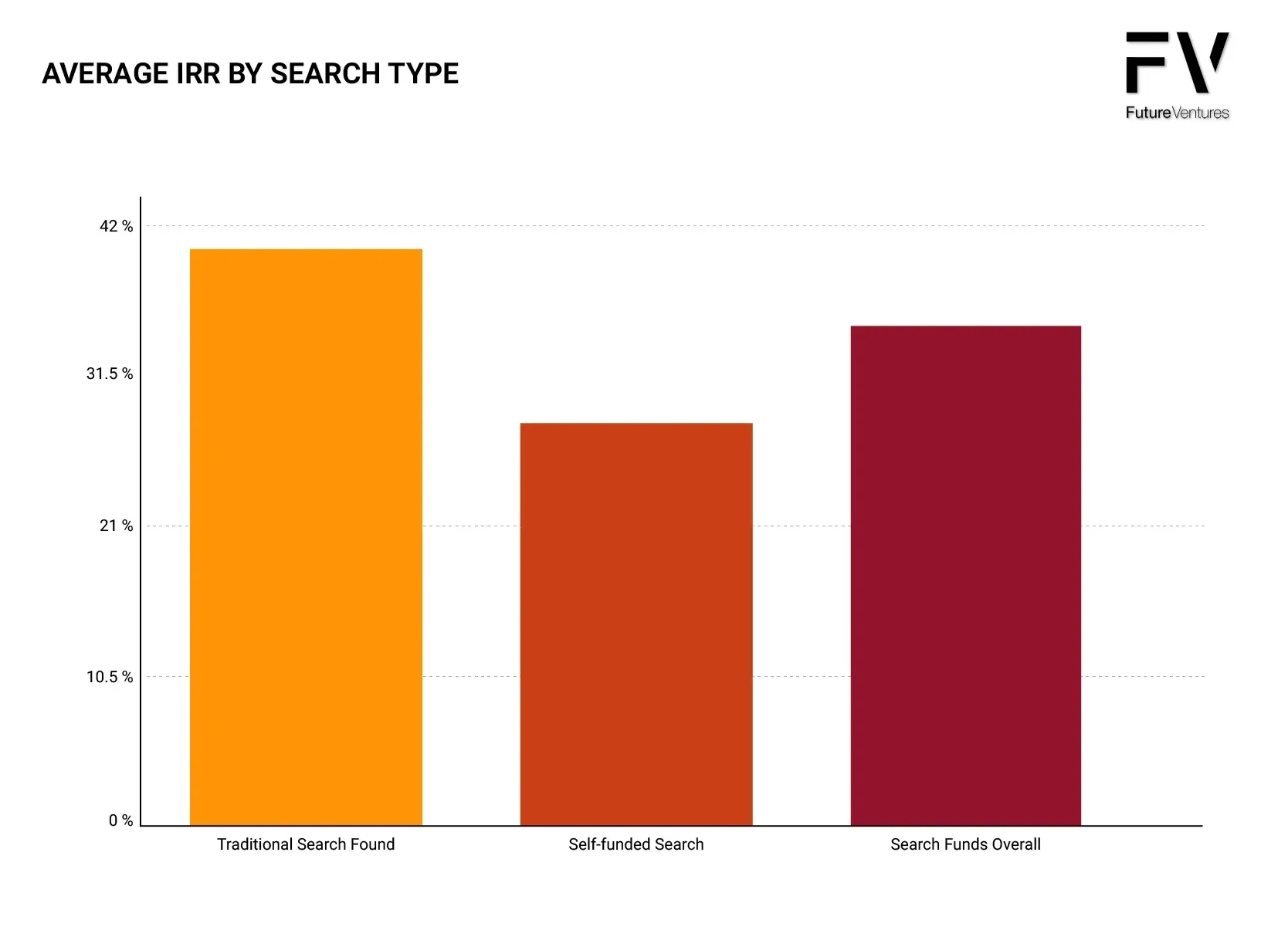
Search funds have historically delivered strong returns, making them an attractive investment vehicle. According to the 2024 Stanford Search Fund Study, the average internal rate of return (IRR) across all search funds is 35.1%, with a return on investment (ROI) of 4.5x.
Exited search funds performed even better, achieving an IRR of 42.9%. While these returns are impressive, they reflect a wide distribution: 11% of companies achieved over 10x ROI, but 31% resulted in losses.
Compared to traditional asset classes like private equity and venture capital, search funds offer superior risk-adjusted returns due to their strategic focus on acquiring and improving small businesses. However, success depends heavily on rigorous due diligence and operational execution.
If you are considering a search fund as a path to entrepreneurship, it is essential to evaluate your skills, experience, and personal goals:
Search funds offer a unique path to entrepreneurship through acquisition, enabling aspiring entrepreneurs to become business owners and operators with the backing of experienced investors. The model offers the potential for high returns but comes with significant challenges, such as finding the right target, conducting due diligence, raising acquisition capital and managing the acquired business effectively.
The search fund model is likely to continue growing and evolving, driven by increased interest from entrepreneurs and investors. As the model gains popularity, competition may increase, leading to innovations in deal structures and target selection. Additionally, international expansion will likely continue, with search funds adapting to local market conditions and regulations.
For aspiring entrepreneurs, search funds offer a compelling path to business ownership and leadership. For investors, search funds provide access to a unique asset class with the potential for attractive returns. Success in the search fund model requires thorough research, careful planning, and a strong network of support from experienced investors and advisors. With the right approach, both searchers and investors can achieve significant value creation and financial success.
Learn how seed strapping can fuel your startup's growth. Discover practical strategies and insights to navigate this crucial funding stage. Read more!
Learn how the Lehman scale sets M&A and capital-raising success fees: the Lehman formula, Double Lehman, modern variations and what founders should negotiate.
Explore the J Curve's implications for investors and strategists, balancing risks and rewards. Gain insights to enhance your decision-making—read more now!
Learn practical strategies to overcome common challenges as a first-time fund manager. Dive into our guide for essential tips and insights. Read more!
MIT found 95% of AI pilots fail. See how companies use AI to improve client workflows — and why integration decides the winners.
Discover how the CEO of the future is transforming business leadership and driving change. Read the article to learn more about this emerging role.
Quality of Earnings (QoE): understand what buyers and investors look for, uncover red flags, and boost valuation before your exit.
Maximize your productivity with our CEO time management template. Learn strategies to structure your day effectively. Read more for practical insights!
How founders use a 90-day execution sprint to turn strategy into results: set quarterly priorities, align the team and keep everyone accountable for progress.
Discover key insights on investor perceptions when founders become defensive. Learn tips to navigate tough conversations effectively. Read the article now!








